Project Context

Before I joined

The Client

Aristotele had already worked with another professional before contacting me. What existed was a rough skeleton of the idea: a social app with profiles, posts, chat and map features. But the product violated many basic UI and UX principles: weak hierarchy, inconsistent spacing, unclear priorities, poor visual quality and flows that did not match the ambition of the business.

Showing the starting point is important because the real work was not just making screens prettier. The challenge was to rebuild the product logic around users, priorities, trust and a clear MVP strategy.

The product before the redesign

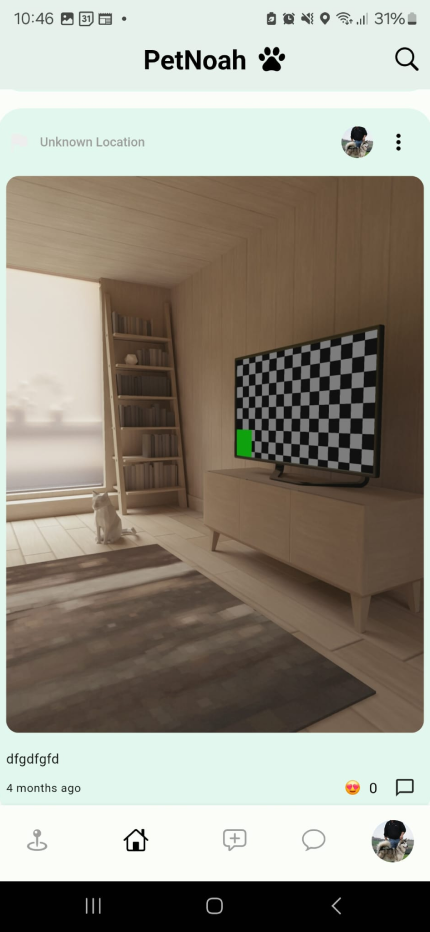
Old social feed
The social feed was structurally understandable, but it felt generic and did not yet feel like a pet-first community experience.
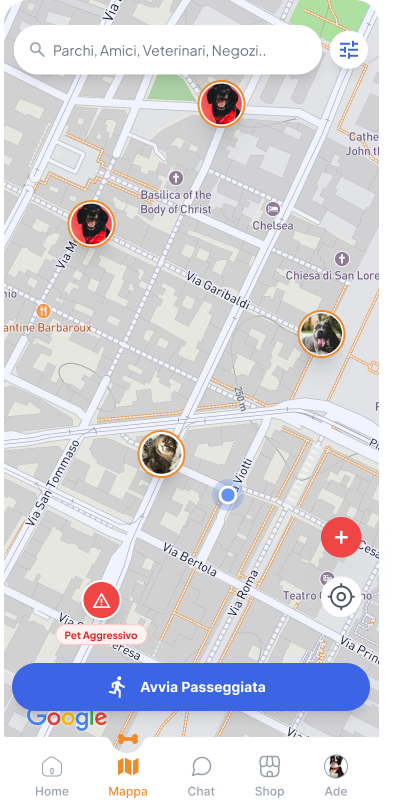
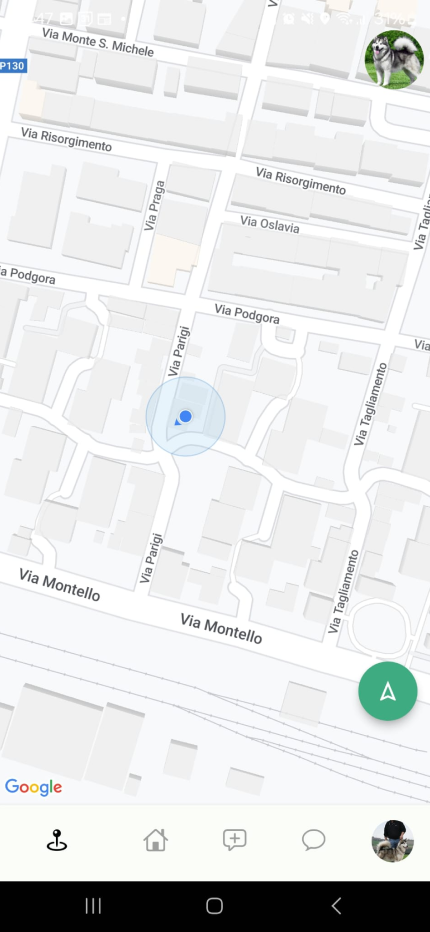
Old map screen
The map was already part of the vision, but it needed clearer use cases, privacy decisions and a stronger interaction model.
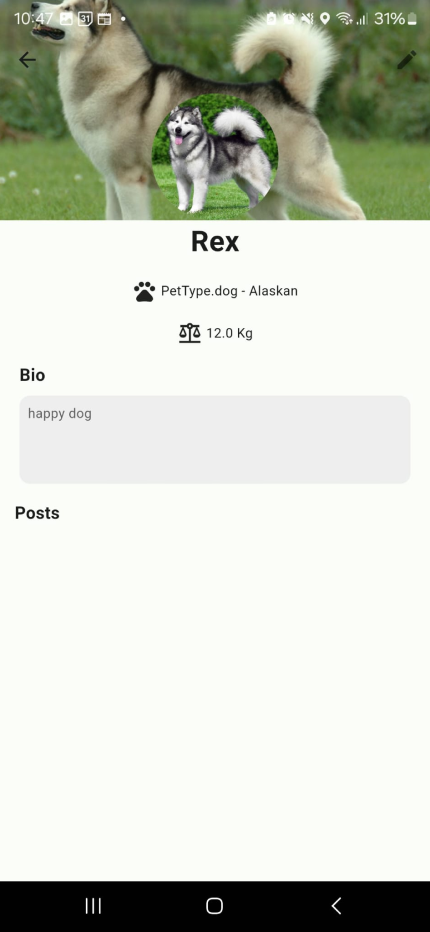
Old pet profile
Pet profiles existed as a concept, but they needed a stronger role inside the social ecosystem.
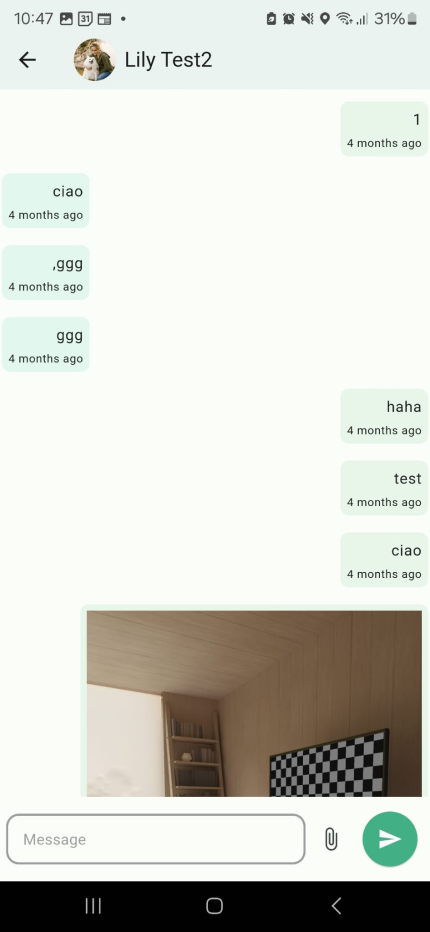
Old chat screen
Messaging was present, but the interface lacked polish, hierarchy and emotional quality for a social product.
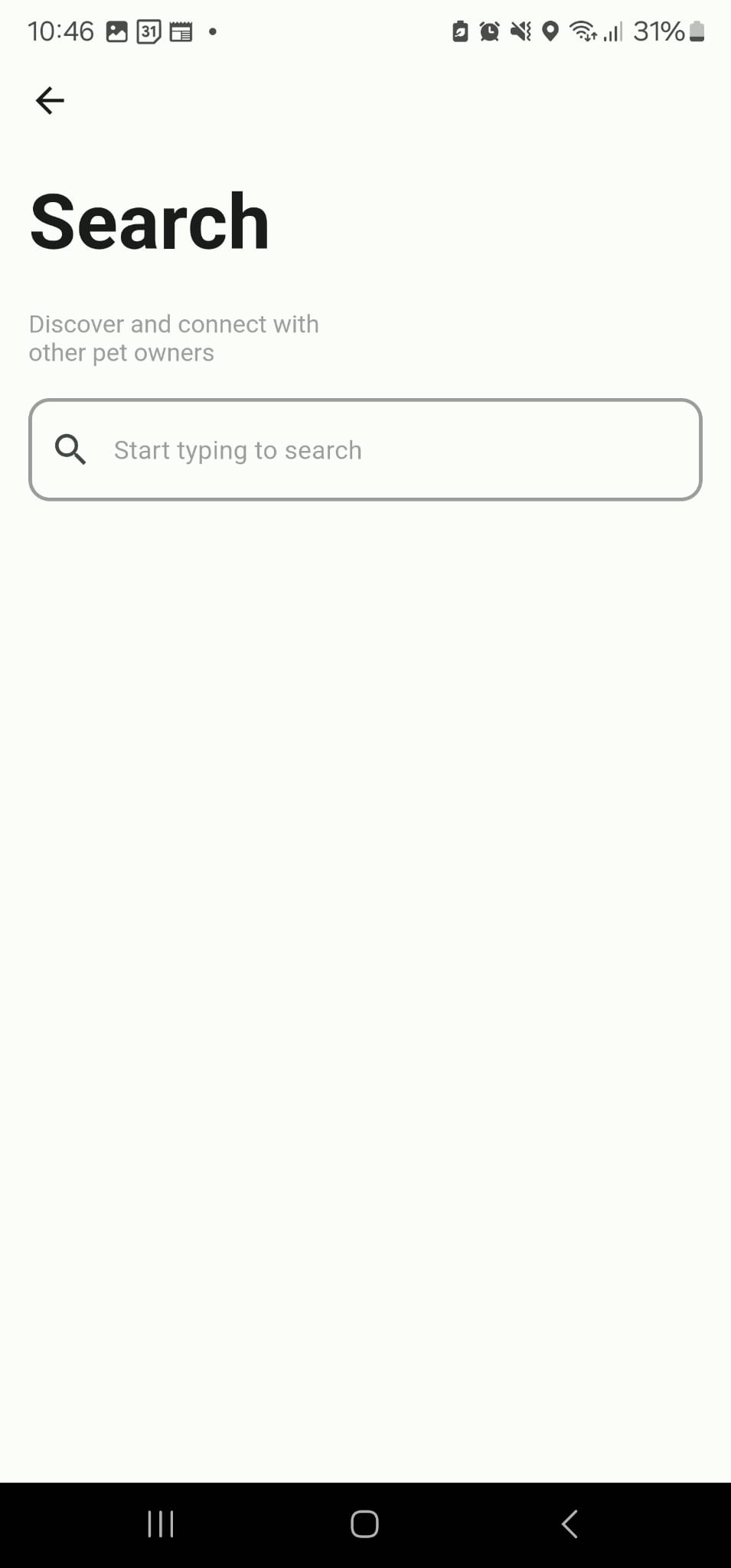
Old search screen
The previous interface had basic screens, but no clear product hierarchy, no meaningful discovery logic and very limited guidance for users.
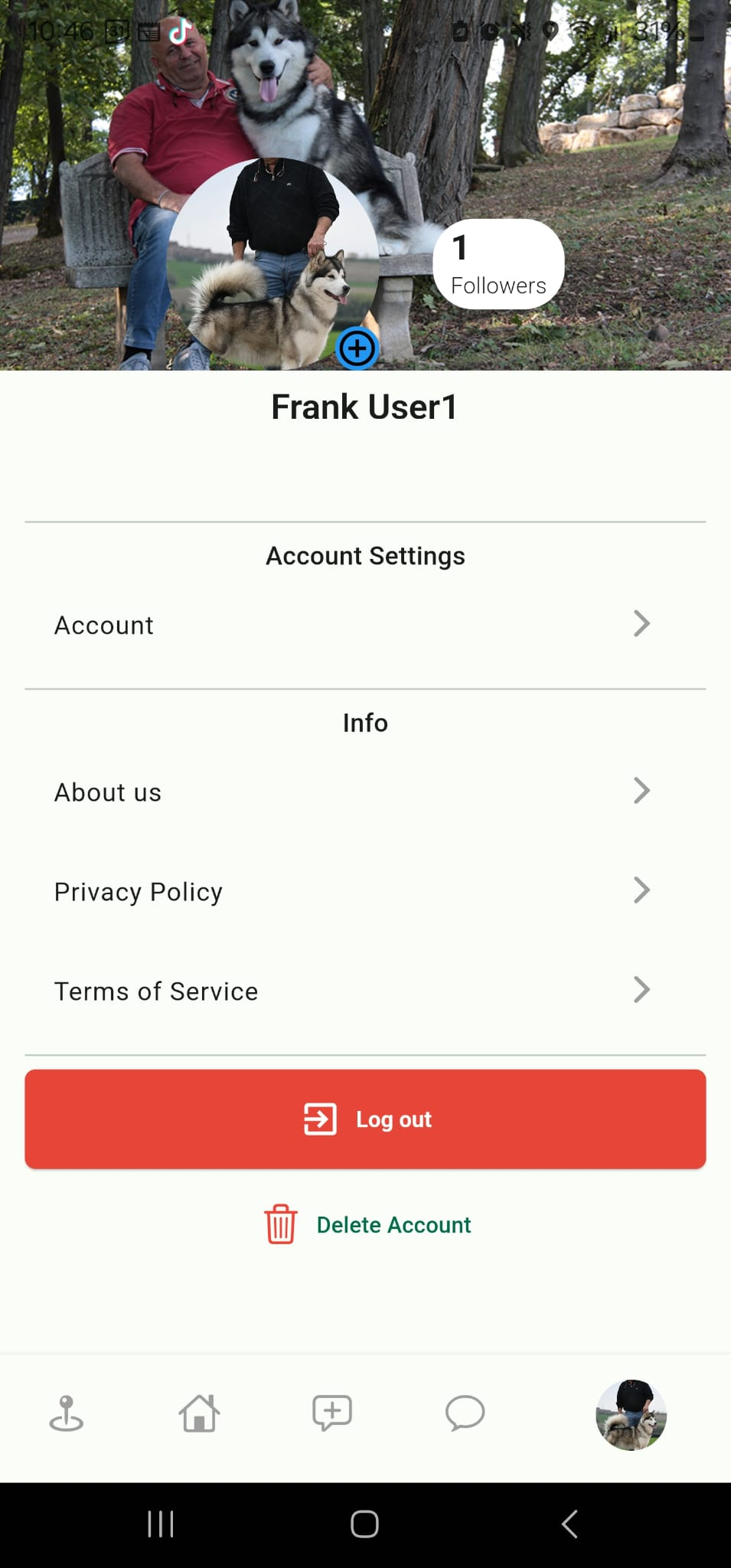
Old settings screen
Profile and settings screens existed, but the visual system felt inconsistent and did not communicate the ambition of the product.
The Vision

The client's vision was ambitious: users should publish pet content, interact with other owners, locate friends on a map, reach them, report dangers, hide their own position, start walks and buy products directly in the app.

πŸ—ΊοΈ Interactive safety map

A live map to locate friends, report dangers, start walks and decide when to stay invisible.

πŸ›’ In-app shop

A commerce area where users can buy pet products directly inside the same mobile experience.

The Real Problem

I explained to the client that I could give shape to his idea, but only if we moved through the UX process as much as possible. With so many features competing for attention, designing immediately would have meant guessing. We needed to understand users, define priorities and build a product around real needs.
Key Question

"The question was not 'Can we build it?'. It was 'What should we build first?'"

Phase 01

Empathize

Understanding who pet owners really are: their habits, frustrations and motivations when it comes to sharing content, ensuring safety and connecting with their local community.

Problem Framing

Framing the Problem

Before starting to design, I defined the problem clearly using the 4W+H framework: who, what, why, goal and how. This prevented designing for assumptions.

4W + H

4W + H Process

WHAT

What problem are we trying to solve?

We are trying to create a connected mobile ecosystem for pet owners: a single product where social sharing, location safety, GPS tracking and pet commerce work together instead of existing in separate, unconnected apps.

WHO

Who are we solving this problem for?

We are solving this for pet owners with varied levels of digital confidence: social creators who want to share content, safety-focused owners who rely on GPS tracking, privacy-conscious families who need location control and local connectors who depend on community services.

WHY

Why are we solving this problem?

Because the pet app market is fragmented. Social apps have no safety layer. GPS apps have no community. Commerce apps have no context. Pet owners switch between three or four unrelated tools just to manage their daily life with a pet.

GOAL

Goal goal do we want to achieve?

To create a pet-first social experience that makes sharing, tracking and discovering feel natural, familiar and emotionally connected: a product users return to daily, not just in emergencies.

HOW

How are we going to solve this problem?

By putting the social feed first (familiar from day one), adding map-based safety as a second core layer, building walk tracking as a daily physical habit and offering commerce as a supporting ecosystem without turning the product into a shop first.

Empathize

User Research

Research shaped the MVP direction. Without it, designing a product with this many features would have meant guessing about what users actually needed and in what order.

For this project I focused on qualitative research: user interviews, a structured questionnaire and behavioral cluster analysis.

User Interviews

  • 12 participants with varied ages and digital confidence levels
  • Pet owners, future owners and shelter volunteers included
  • Behavioral and motivational patterns across distinct segments
  • Feature priority elicitation through open exploratory questions

Structured Questionnaire

  • 22 questions across 6 thematic groups
  • Covered social habits, tracking, privacy, commerce and accessibility
  • Feature priority scoring on a 1-to-5 scale per respondent
  • Monetization signals: subscription willingness and premium feature pricing

Behavioral Cluster Analysis

  • Social Pet Lovers (4/12): feed, posts, discovery: social first
  • Safety-driven Owners (3/12): GPS, geofence, map: trust first
  • Privacy-conscious Families (3/12): visibility control, family link
  • Service and Commerce Users (2/12): shop, local services, booking
Research

Competitor Analysis

I mapped the competitive landscape to understand what already existed and where the clear gaps were. No single product occupied the space PetNoah was designed to fill.

Competitor Analysis

The pet app market contains strong individual solutions, but every product covers only one layer: social, GPS or health. No product connects all three into a single trusted ecosystem.

Main competitors

ProductWhat they doGap for this project
TractiveGPS Pet TrackerReal-time GPS tracking with geofencing and activity monitoring for petsNo social features, no content sharing, no community layer: a closed hardware ecosystem
PawsomePet Social NetworkShare pet photos, follow other pet profiles and engage with community contentNo map, no GPS, no location safety layer: purely social with no physical-world integration
BarkHappyLocal Pet CommunityDiscover dog-friendly places, events and connect with nearby ownersDogs only, no privacy controls, limited commerce: partial coverage of user needs
WoofzDog Training AppStructured training programs and behavioral guidance for dog ownersSingle-purpose utility: no social feed, no map, no GPS and no commerce layer
PetDeskVet and Health ManagementManage vet appointments, pet health records and receive clinical remindersB2B and clinical focus only: no consumer social, no GPS, no map and no daily engagement

Positioning map

ProductSocial FeedGPS TrackingMap SafetyPrivacy ControlsIn-App CommercePet Profiles
TractiveLowHighMedLowLowLow
PawsomeHighLowLowLowLowHigh
BarkHappyMedLowMedLowLowMed
WoofzLowLowLowLowLowMed
PetDeskLowLowLowLowLowLow
PetNoahHighMedHighHighHighHigh
Research Synthesis

Key UX Opportunities

With the research complete, I moved from observation to interpretation. Where could a well-designed product make the most meaningful difference? These are the five opportunities I decided to pursue.

Key UX Opportunities
  1. Lead with familiar social behaviour

    The research showed clearly that users do not want to learn new interaction patterns. They want a product that behaves like Instagram or TikTok but is built around pets. Familiarity is not a compromise: it is the strategy.

    ↳ Implication

    Design the social feed and posting flow so closely to established patterns that a first-time user needs no tutorial to publish their first post.

  2. Turn location sharing into a trust feature

    Location sharing was the most polarising topic in interviews. Users who wanted it were enthusiastic; users who feared it were ready to abandon the product entirely. The difference was always control: who can see me, when and how do I turn it off.

    ↳ Implication

    Privacy controls must be surface-level and explicit. Ghost mode (invisible) should be one tap away from any screen that shows the map.

  3. Make GPS a daily safety habit

    GPS tracking was seen as emergency-only by most users. The opportunity is to turn it into a daily routine: a walk session that starts naturally, tracks automatically and delivers a satisfying summary at the end.

    ↳ Implication

    Walk sessions should start in one tap and end with stats and a shareable route summary. The GPS layer must be reliable and low-friction.

  4. Build community around local safety

    The danger report feature resonated strongly with pet owners who had experienced scares: a loose dog, a toxic plant, a traffic alert. The map becomes a community safety layer when the whole neighbourhood contributes to it.

    ↳ Implication

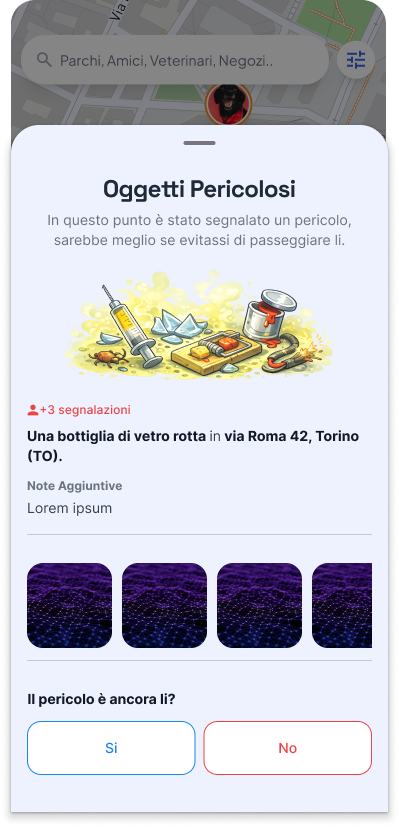
    Danger reports should be easy to create (long-press on map), categorised and broadcast only to nearby users to avoid noise.

    • Traffic or road hazard
    • Loose or aggressive animal
    • Toxic plants or substances
    • Construction or fence gaps
  5. Commerce as ecosystem, not as a destination

    Users did not reject in-app commerce. They rejected the idea of the app feeling like a shop. The opportunity is to integrate products and local services naturally into the pet context: accessories that appear after a walk, local services discoverable on the map.

    ↳ Implication

    The shop entry point should live in navigation, not in the hero. Products should be contextually suggested, never aggressively promoted.

Research Synthesis

Final Insight

After gathering and analysing all the data, I synthesised everything into one clear conclusion: the north star that guided every decision in the phases that followed.

Final Insight

The pet app market is fragmented by design. There are social apps without safety, GPS trackers without community and commerce apps without context. Pet owners cobble together three or four unrelated tools to manage a single daily routine. PetNoah closes this gap: a familiar social experience extended by a safety map, walk tracking and commerce, all within the same trusted ecosystem.

Social FeedSafety MapWalk TrackingPrivacy ControlsIn-App Commerce
Qualitative Research

Personas

Five primary personas representing the distinct behavioral clusters found in research: social creators, safety-focused trackers, privacy-conscious connectors, pet professionals and community volunteers.

Primary Personas

Each persona covers a distinct behavioral cluster from research. Together they validate the MVP scope: social feed, safety map and privacy controls are non-negotiable; commerce and GPS are supporting layers that serve specific but important segments.

PrimarySocial Explorer

Laura Rossi

29 years old Β· Milan

UX/Product Designer who loves sharing Luna's daily moments, attending pet events and discovering new pet-friendly places.

I want Luna to have her own stage and to discover other owners near me.
PetLuna, Labrador, 2y
Tech ComfortHigh
MotivationShare content, build community

Goals

  • –Post quickly and beautifully
  • –Discover pet-friendly events nearby
  • –Get meaningful engagement

Pain Points

  • –Slow uploads ruin momentum
  • –Feed relevance is too low

Key Needs

  • –Fast posting flow
  • –Smart feed filters
  • –Rich per-pet profile
PrimaryActive Tracker

Marco Bianchi

36 years old Β· Suburban area

Passionate runner who uses fitness apps and GPS devices daily. Deeply focused on Bolt's safety and real-time tracking accuracy.

If Bolt escapes, I want to know exactly where he is and reach him immediately.
PetBolt, Husky, 3y
Tech ComfortHigh (GPS / fitness devices)
MotivationPet safety and precise tracking

Goals

  • –Precise live tracking with breadcrumb trail
  • –Custom geofence notifications
  • –Full walk history with stats

Pain Points

  • –GPS latency causes anxiety
  • –Battery drain is unpredictable
  • –Walk tracking apps lack social integration

Key Needs

  • –Stable real-time map
  • –Alerts under 10 seconds
  • –Clear battery dashboard
SecondaryLocal Connector

Giovanna Conti

64 years old Β· Small provincial town

Retired. Mainly uses WhatsApp and wants an app that reassures her and helps find local services for Micio without confusion.

I want a simple app that reassures me and helps me find the right neighbour when I need it.
PetMicio, Cat, 6y
Tech ComfortMedium-low
MotivationEase of use, local services

Goals

  • –Clear and readable interface
  • –Find local vet in 2 taps or fewer
  • –Receive only essential notifications

Pain Points

  • –Crowded UIs cause confusion
  • –Too many notifications trigger anxiety
  • –Fear of accidentally sharing location

Key Needs

  • –Large readable text and icons
  • –Short direct paths
  • –Privacy-first safe defaults
SecondaryPet Professional

Paolo Ricci

42 years old Β· Medium-sized city

Dog daycare owner who wants to be found easily by nearby owners and manage booking requests without constant phone calls.

I want to be found easily by nearby owners and manage requests without constant phone calls.
RoleDog daycare owner
Tech ComfortMedium
MotivationAcquire clients, manage bookings

Goals

  • –Create a verified business profile
  • –Receive qualified leads
  • –Track basic performance insights

Pain Points

  • –Unqualified contacts waste time
  • –No built-in availability management
  • –No in-app messaging workflow

Key Needs

  • –Verified profile with integrated booking
  • –In-app messaging to leads
  • –Simple lead conversion insights
SecondaryVolunteer

Simone Esposito

31 years old Β· Medium-sized city

Project manager and shelter volunteer who coordinates rescues, adoptions and local events. Needs fast tools to mobilize the community.

I need fast tools to mobilize the community when an animal is in trouble.
RoleShelter volunteer
Tech ComfortHigh
MotivationCommunity coordination, adoptions

Goals

  • –Publish urgent adoption posts with priority
  • –Create events and manage RSVPs
  • –Coordinate volunteers efficiently

Pain Points

  • –Outreach tools are ineffective at scale
  • –No urgency filters for critical posts

Key Needs

  • –Urgency badge for priority posts
  • –Geolocated community broadcast
  • –Group tools and RSVP management
Qualitative Research

Empathy Maps

Six empathy maps built from interview data, one per primary persona plus the Gen-Z creator segment. They reveal the emotional motivations, frustrations and desired gains behind each behavioral cluster.

Empathy Map
Laura Rossi avatar

Laura Rossi's Empathy Map

Social Explorer

Says

DIRECT EXPRESSIONS

  • Posts in 2 taps
  • I want to discover nearby places
  • Photo quality matters to me

Thinks

INTERNAL BELIEFS

  • If it's slow, I won't use it
  • I want privacy per post
  • My feed should be relevant

Does

VISIBLE ACTIONS

  • Posts photos and short videos
  • Follows other pet profiles
  • Shares content on Instagram

Feels

EMOTIONAL STATES

  • Excited when posts get engagement
  • Frustrated by slow uploads
  • Curious about local events

Pains

FRUSTRATIONS

  • Poor compression ruins photo quality
  • Feed filters are unhelpful
  • Onboarding is too long

Gains

DESIRED OUTCOMES

  • Fast and beautiful posting flow
  • Relevant local discovery
  • Simple per-post privacy controls
Empathy Map
Marco Bianchi avatar

Marco Bianchi's Empathy Map

Active Tracker

Says

DIRECT EXPRESSIONS

  • I need to see Bolt's position immediately
  • Geofences must be reliable
  • Show me the battery status

Thinks

INTERNAL BELIEFS

  • Reliability matters more than aesthetics
  • Granular settings give me control
  • Activity history has real value

Does

VISIBLE ACTIONS

  • Creates safe zones and monitors walk routes
  • Monitors map during walks
  • Checks activity stats after runs

Feels

EMOTIONAL STATES

  • Calm when alerts arrive under 10 seconds
  • Anxious with GPS lag
  • Engaged when tracking metrics are clear

Pains

FRUSTRATIONS

  • GPS latency creates real anxiety
  • Battery drain is unpredictable
  • Walk tracking apps have no social layer

Gains

DESIRED OUTCOMES

  • Stable real-time map with trail
  • Instant reliable alerts
  • Clear battery and stats dashboard
Empathy Map
Giovanna Conti avatar

Giovanna Conti's Empathy Map

Local Connector

Says

DIRECT EXPRESSIONS

  • A simple app reassures me
  • I need to find services nearby
  • I won't share my location by mistake

Thinks

INTERNAL BELIEFS

  • The interface must be very readable
  • Labels should be clear and obvious
  • Privacy defaults must be conservative

Does

VISIBLE ACTIONS

  • Uses WhatsApp daily for communication
  • Searches for local vets
  • Checks Micio's basic info

Feels

EMOTIONAL STATES

  • Reassured when the interface is calm
  • Confused by too many options
  • Worried about accidentally sharing location

Pains

FRUSTRATIONS

  • Crowded UI causes confusion
  • Too many notifications trigger anxiety
  • Location sharing fear creates hesitation

Gains

DESIRED OUTCOMES

  • Large readable text and clear icons
  • Short direct paths to key actions
  • Non-invasive and clear notifications
Empathy Map
Paolo Ricci avatar

Paolo Ricci's Empathy Map

Pet Professional

Says

DIRECT EXPRESSIONS

  • I want qualified clients only
  • Booking must be simple to manage
  • Give me trust signals and verification

Thinks

INTERNAL BELIEFS

  • Time is money: unqualified leads waste both
  • Strong insights help me improve
  • Leads need to filter before reaching me

Does

VISIBLE ACTIONS

  • Creates and maintains business profile
  • Replies to booking requests
  • Checks basic performance insights

Feels

EMOTIONAL STATES

  • Motivated when bookings convert
  • Frustrated by unqualified contacts
  • Careful about subscription costs

Pains

FRUSTRATIONS

  • No integrated booking tool
  • Lack of profile verification hurts trust
  • No in-app messaging workflow

Gains

DESIRED OUTCOMES

  • Verified business profile with booking
  • Integrated messaging to leads
  • Clear conversion insights
Empathy Map
Simone Esposito avatar

Simone Esposito's Empathy Map

Volunteer

Says

DIRECT EXPRESSIONS

  • Alert everyone around me fast
  • Urgent posts must appear on the map
  • Local groups are my primary tool

Thinks

INTERNAL BELIEFS

  • Speed is the priority in emergencies
  • Trust needs verification to work at scale
  • Broadcast must reach the right people

Does

VISIBLE ACTIONS

  • Publishes missing pet alerts
  • Creates events and manages RSVPs
  • Coordinates volunteer groups

Feels

EMOTIONAL STATES

  • Deeply involved and responsible
  • Frustrated when outreach fails
  • Proud when animals are found

Pains

FRUSTRATIONS

  • Hard to prioritize urgent posts
  • Verification is slow to activate
  • No coordination tools for groups

Gains

DESIRED OUTCOMES

  • Urgency badge for priority posts
  • Geolocated community broadcast
  • Group management and RSVP tools
Empathy Map
Giulia Ferri avatar

Giulia Ferri's Empathy Map

Gen-Z Creator

Says

DIRECT EXPRESSIONS

  • Make a reel in 60-90 seconds max
  • Give me templates and music
  • Show me my metrics

Thinks

INTERNAL BELIEFS

  • Aesthetics and speed come first
  • Per-post privacy must be granular
  • Local challenges grow my following

Does

VISIBLE ACTIONS

  • Records and edits short videos
  • Joins local pet challenges
  • Cross-posts to Instagram and TikTok

Feels

EMOTIONAL STATES

  • Excited when a clip performs well
  • Annoyed by limited editing tools
  • Proud of her creator profile

Pains

FRUSTRATIONS

  • Slow uploads break the creative flow
  • Editing tools feel uncomfortable
  • Geotag privacy is confusing

Gains

DESIRED OUTCOMES

  • Fast in-app video editor with templates
  • Visibility into local trends
  • Simple analytics for creators
Qualitative Research

Current Experience Journeys

I mapped the complete experience each key persona goes through today, without PetNoah. From a simple daily action to frustration and resignation, step by step and emotion by emotion. Understanding the current pain at each stage was essential before designing a better path.

Laura Rossi avatar

Laura Rossi

Laura's Current Experience

The social creator's daily routine before PetNoah exists.

Wants to share
Searches for community
Posts to general social
Finds an event
Wants to share the walk
Checks nearby places
ExcitedCuriousUnsatisfiedHopefulFrustratedNeutral
ActionOpens Instagram to share a photo of Luna at the park.ActionLooks for pet groups on Facebook and finds scattered unmoderated communities.ActionPosts to her Instagram story and gets minimal reaction from non-pet followers.ActionSpots a pet meetup link in a WhatsApp group, three days after it was posted.ActionTakes Luna to the park but has no way to record the route or share the walk.ActionOpens Google Maps to find a pet-friendly cafe and gets generic unsorted results.
Thinks"This is going to look great on my story."Thinks"There must be a local group somewhere."Thinks"Only my existing followers see this, not local owners."Thinks"I wish I had found this earlier."Thinks"I want to show where we went but I do not have a single tool for this."Thinks"Why can't I see what other owners actually recommend nearby?"
PainNo platform built around pets: general social feels wrong for pet-specific content.PainPet groups are fragmented, hard to find and without real local relevance.PainNo pet-specific feed for local discovery or niche pet audiences.PainEvents are buried in messaging apps with no RSVP and no integrated calendar.PainWalk tracking and social sharing are in completely separate products.PainNo pet-aware local map with owner recommendations or community verification.
OpportunityPet-specific feed with per-pet profiles and local discovery.OpportunityDedicated local pet feed with community tabs and nearby-owner discovery.OpportunityLocal-first feed filtered by location and pet type.OpportunityEvent section inside the feed with RSVP and a map pin.OpportunityWalk session with automatic route recording and a quick social post from the summary.OpportunityMap layer showing nearby owners, events and pet-friendly places.
Marco Bianchi avatar

Marco Bianchi

Marco's Current Experience

The safety-focused tracker's walk turns into a stressful search.

Starts the walk
Bolt breaks free
Opens GPS app
Cannot share position
Finds Bolt alone
After the walk
ConfidentWorriedFrustratedAngryRelieved but tiredDeflated
ActionOpens the app and starts a walk session.ActionBolt escapes through a gap in the fence and runs into the open park.ActionLaunches the GPS app and waits 18 seconds for a position update.ActionPartner calls to ask where Bolt is and Marco cannot share the live map.ActionEventually locates Bolt by following the GPS position on foot for 20 minutes.ActionReviews a basic route on the GPS app with no stats, no context and no social layer.
Thinks"I want to track this route and share it later."Thinks"Where did he go? I need his position now."Thinks"This lag is unacceptable when every second matters."Thinks"I am in the middle of a search and I have to explain verbally where I am."Thinks"I found him, but I was completely alone in this."Thinks"I do not even know how far we walked or how to share this with the community."
PainHis GPS device has no social integration and no shared map with his partner.PainNo instant geofence alert: had to visually scan the area first.PainHigh GPS latency on older hardware, no breadcrumb trail visible.PainNo position sharing feature: all GPS data is siloed on a single device.PainNo community alert system to coordinate a local search with nearby owners.PainWalking data is siloed in a separate tool with no social value.
OpportunityWalk tracking with a live shared map visible to trusted contacts.OpportunitySub-10-second geofence alert with Bolt's live position on the map.OpportunityReal-time position with 5-second refresh and full breadcrumb trail.OpportunityOne-tap live position share link, valid for a set time window.OpportunityNearby-owner alert: local owners receive a notification and can help.OpportunityWalk summary with stats, social share option and community route replay.
Giovanna Conti avatar

Giovanna Conti

Giovanna's Current Experience

Finding a trustworthy local vet turns into an exhausting process.

Micio is unwell
Asks on WhatsApp
Searches Google Maps
Calls multiple vets
Books via neighbor
Worries about the map
WorriedNeutralOverwhelmedFrustratedRelievedNervous
ActionNotices Micio is not eating well and needs a trustworthy local vet.ActionSends a message in the neighborhood WhatsApp group asking for a vet recommendation.ActionOpens Google Maps and searches for vets: too many results, no pet-type filter.ActionCalls three vet offices: two do not answer, one has no availability for two weeks.ActionA neighbor gives her a personal recommendation and direct phone number.ActionA neighbor mentions the app shows your exact location on a public map.
Thinks"I need a good vet for cats, nearby, that I can actually trust."Thinks"Someone must know a reliable one."Thinks"I cannot tell which one is for cats and which one is for dogs."Thinks"Why is booking this so complicated?"Thinks"This worked but only because I asked exactly the right person at the right moment."Thinks"I absolutely do not want strangers to know where I live."
PainNo local pet service directory with ratings or community trust signals.PainGets five different answers with no way to compare or verify any of them.PainGeneral maps lack pet-type filters and ratings from non-pet users are irrelevant.PainNo real-time availability visible, all booking requires phone calls.PainThe whole process required leaving every app and making multiple phone calls.PainNo prior communication about privacy defaults or location visibility levels.
OpportunityMap-based discovery of verified vets and groomers with owner ratings.OpportunityVerified pet professional profiles with reviews from nearby owners.OpportunityFiltered local search by pet type, specialty and verified owner reviews.OpportunityReal-time availability and one-tap in-app booking from the profile.OpportunitySingle-tap booking from the pet professional profile with booking confirmation.OpportunityPrivacy-first defaults with a clear and friendly visible/invisible toggle.
Phase 02

Define

Transforming research findings into clear decisions: user needs, pain points, product goals and the direction that guided every design choice in the phases that followed.

Synthesis

From Research to Focus

After 12 interviews and the structured questionnaire, the core challenge revealed itself: PetNoah was not one product. It was three unrelated products in one interface. Social, GPS and commerce each pulled in different directions without a shared hierarchy.

The main challenge was not simply helping users 'track their pets' or 'share pet content'. The deeper problem was that the product had no clear emotional centre. Users needed to feel the app was for them, not just a feature aggregator.

Key design direction

PetNoah must earn trust through familiarity first. The social feed sets the foundation. Map-based safety builds trust. GPS tracking extends the product into the physical world. Commerce supports the ecosystem without claiming the main stage.

Problem Framing

Key Pain Points

These three pain points emerged consistently across all five personas. They are structural problems that go beyond user habits: they require deliberate design decisions to resolve.

Too many features, no priority

Social feed, GPS tracking, map, danger reports, walks and shop features were all competing for attention without a clear hierarchy.

Design implication

Without a clear MVP definition, every feature looked equally important and the product had no direction.

Trust and privacy friction

Location sharing created value only when users understood who could see them, when they were visible and how to go invisible on demand.

Design implication

Privacy had to be a first-class design decision, not an afterthought added at the end of the process.

Unclear MVP focus

The initial concept had potential, but the existing screens did not follow solid UI/UX principles and lacked a clear product direction.

Design implication

Before designing screens, we had to understand which features mattered most to users and which should enter the first release.

Problem Framing

User Needs

Four core needs extracted from research synthesis. These shaped every priority decision about what to build in the MVP and what to defer to later iterations.

User needWhy it matters
Share pet moments with easeUsers want a familiar, low-friction experience they already know from Instagram or TikTok: not a new social grammar to learn.
Feel genuinely safe using the mapLocation sharing only creates trust when users have clear, explicit control over their visibility states at all times.
Understand the app quickly on first useA product with this many features needs strong, focused onboarding to avoid drop-off before users discover the core value.
Access pet products and local servicesCommerce and local services are welcome additions, but only if they support the ecosystem and do not distract from the primary social experience.
Problem Framing

Problem Statement

One clear How Might We question to focus the entire design effort. This became the anchor for every decision in the Ideate and Design phases.

How might we create a pet-first social experience that feels familiar and emotionally engaging, while giving users enough control to feel safe with location, privacy and real-world pet care features?
Product Direction

Product Goals

The Define phase crystallised into six product goals: the outcomes PetNoah must achieve to be genuinely useful and worth building.

  1. Build a familiar social core

    The feed must feel immediately recognizable to anyone who has used Instagram, TikTok or Facebook. Zero new interaction grammar to learn on day one.

  2. Make the map a trust layer

    Visibility controls, privacy-first defaults and danger alerts must make location sharing feel safe by explicit design, never by assumption.

  3. Support GPS as a daily safety layer

    Walk tracking and geofence alerts should start in one tap, deliver notifications in under 10 seconds and display route stats clearly at the end of every session.

  4. Integrate commerce without friction

    The shop should feel like a natural extension of the pet ecosystem: useful for accessories and local services, never intrusive or primary.

  5. Design privacy-first defaults

    Every location feature must default to invisible. Sharing should be an active opt-in, never a passive default that surprises new users.

  6. Enable progressive feature discovery

    New users should reach their first value (posting a pet moment) in under 2 minutes. Advanced features should reveal themselves through use, not through a features tour.

Product Direction

User Needs vs Product Goals

Mapping user needs directly to product responses and business value, ensuring every design decision serves both the user and the product strategy at the same time.

User needProduct responseBusiness value
Share pet moments with easeFamiliar social feed with fast posting and per-pet profilesHigher engagement, retention and daily active usage
Feel safe using the mapClear visibility states, danger reports and safe map defaultsBuild trust and reduce churn from privacy-conscious users
Understand the app quicklyFocused MVP with progressive feature discoveryReduce onboarding drop-off and improve activation rate
Access products and local servicesLightweight in-app shop integrated as ecosystem supportSustainable commerce layer and B2B revenue from pet businesses

The design challenge

PetNoah should feel like a trusted social experience first. Commerce, GPS and safety features should support that ecosystem, not compete with it.

Phase 03

Ideate

Exploring possible solutions: from brainstorming to feature prioritisation, user flows and information architecture, before converging on a clear product direction.

Bridge

Design Challenge

Coming out of the Define phase, everything crystallised into one question: the challenge that became the north star for the entire ideation process.

Design Challenge

How might we design a pet-first social experience that feels familiar from day one, while giving users the control and safety they need to share location, trust the community and return every day?

Ideation

How Might We...

I translated each pain point into a 'How Might We' question to frame ideation around real user problems rather than assumed solutions.

Pain pointHow Might We…
Social apps feel generic to pet ownerscreate a social experience that feels built for pet owners, not repurposed from a general-purpose platform?
Location sharing creates privacy anxietygive users enough control over their visibility that sharing location feels like an active choice, not a default risk?
GPS and social are fragmented toolsconnect GPS safety features to the social layer so they reinforce each other instead of competing for attention?
Onboarding drops users before they reach the core valuedesign a first-run experience so focused and familiar that users reach their first valuable moment in under 2 minutes?
Commerce feels like an interruptionintegrate the shop so naturally into the pet ecosystem that users discover it through context, not through a push notification?
Danger alerts are passive or nonexistentcreate a community-driven safety layer that alerts nearby owners in real time without generating noise for unaffected users?
Multiple features compete for attention with no clear prioritydesign a navigation system that surfaces the social feed first and reveals advanced features progressively as users grow into the product?
Ideation

Brainstorming Solutions

I explored multiple directions before deciding on anything. The goal was not to find the right answer immediately: it was to generate enough options to identify the strongest ones.

User needPossible solution
Share pet momentsSocial feed with per-pet profiles and a familiar posting flow borrowed from Instagram
Feel safe on the mapExplicit visibility toggle with ghost mode (invisible by default) and privacy-first safe zones
Track my pet in real timeGPS live map with breadcrumb trail, geofence alerts and sub-10-second position refresh
Report local dangersLong-press map reporting with danger categories and nearby-owner broadcast alert
Start and record a walkWalk sessions with start/stop, live route recording, stats summary and a social share option
Find pet products and servicesIn-app shop integrated as a supporting layer: accessories, food, local services and booking
Discover the local pet communityMap-based social discovery of nearby owners, events and pet-friendly places

The strongest ideas clustered around three dimensions: social familiarity, location safety and physical-world integration through GPS. Commerce consistently appeared as a supporting layer, never as a primary destination.

Product Scoping

Feature Prioritisation

Not everything could go into v1. I used a Must / Should / Could / Later framework to decide what was essential for the MVP and what should evolve with the product.

PriorityFeatureReason
Must haveSocial feed and postingCore social value: the primary reason users open the app daily
Pet profile (per pet)Identity layer required by the feed, map, walk and shop layers
Map with visibility toggleLocation sharing requires explicit privacy controls from day one
User onboarding and privacy setupA multi-feature app needs a focused first-run to reach first value fast
Should haveWalk tracking with GPSDrives daily retention through walk sessions and activity stats
Danger report systemCommunity safety feature that increases trust and map engagement
Could haveIn-app shopHigh revenue potential but must not distract from the social and safety core in v1
Chat and messagingIncreases social engagement: can follow core feed launch without blocking it
LaterBusiness profiles and bookingsStrong B2B layer: high value but requires a separate onboarding flow

I prioritised features based on three criteria: user value, feasibility for an MVP and alignment with PetNoah's core mission. The first version needed to focus on the social feed, map safety and pet profiles. GPS and commerce follow as the community grows.

Product Scoping

User Flows

Six core flows reconstructed to clarify the most important user actions before any interface decisions. The interface needed to support real user actions, not disconnected screens.

Flow 01

Onboarding and pet profile creation

  1. Download and open app
  2. Sign up or log in with SSO
  3. Create pet profile: name, breed, photo
  4. Set privacy defaults (who can see your location)
  5. Enter the social feed for the first time
Flow 02

Create and publish a post

  1. Tap the create button on the social feed
  2. Select a photo or video from the library
  3. Add a caption and tag the pet
  4. Choose post visibility (friends / public)
  5. Publish and see it appear in the feed
Flow 03

Open the map and manage visibility

  1. Tap the map icon in the navigation
  2. View nearby friends and their pets on the map
  3. Toggle own visibility to invisible mode
  4. Tap a friend's pin to view their profile
  5. Send a message or navigate to their location
Flow 04

Report a local danger

  1. Open the map
  2. Long-press on a specific location
  3. Select 'Report danger' from the context menu
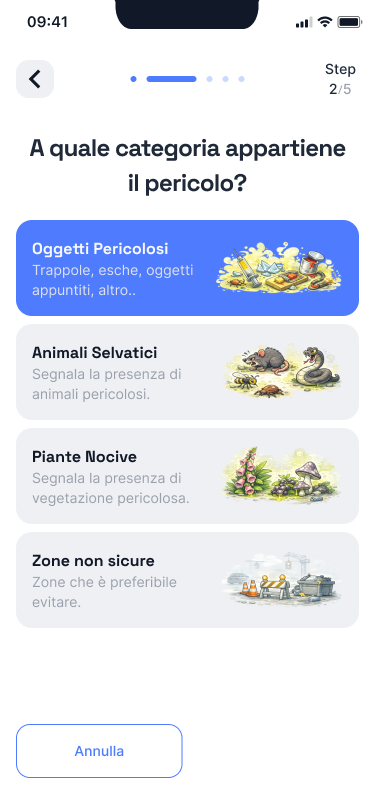
  4. Choose a category: traffic, loose animal, hazard
  5. Confirm the report and publish the alert for nearby users
Flow 05

Start a walk with GPS tracking

  1. Tap the walk icon on the home screen
  2. Confirm pet and start the walk session
  3. View the live breadcrumb trail on the map
  4. Receive a geofence alert if the pet exits the safe zone
  5. End the walk and review the summary and stats
Flow 06

Buy from the in-app shop

  1. Tap the shop icon in the navigation
  2. Browse products or use the search bar
  3. Open a product detail page
  4. Add the product to the cart
  5. Checkout using saved address and payment method

These six flows cover the full MVP: social posting, map safety, danger reporting, GPS walk tracking and commerce. Together they define the navigation logic and the sequence of every key task.

Product Scoping

Information Architecture

I organised the app's structure around the main user goals: sharing content, staying safe, tracking walks and accessing services. The IA was designed for daily action, not passive data storage.

PetNoah
Feed
  • Home feed
  • Create post
  • Discover nearby
  • Notifications
Map
  • Live map
  • Nearby owners
  • Danger reports
  • Events nearby
Walks
  • Start walk
  • Live tracking
  • Walk history
  • Stats and badges
Shop
  • Browse
  • Search products
  • Cart
  • My orders
Profile
  • My pets
  • Privacy settings
  • Notifications
  • Account

The information architecture was organised around five primary destinations. Feed and Map are the daily anchors. Walks extends the product into physical space. Shop and Profile provide supporting utility without competing for primary attention.

Concept

Early Concept Direction

The ideation phase closed with a clear product concept built around four pillars. These became the framework for every design decision in the Design phase.

Social

A familiar feed-first experience where pet owners share content, follow other pets and discover nearby owners.

Safety

A map layer that turns location sharing into a trust feature: privacy controls, danger alerts and live visibility.

Tracking

Walk sessions that extend the product into physical space, with live GPS tracking and shareable route summaries.

Commerce

An integrated shop that supports the pet ecosystem without competing with the social and safety core.

PetNoah is Social first, Safety second, Tracking as a daily extension, Commerce as the ecosystem layer. In that order.

Phase 04

Design

From rough wireframes to a smoother, familiar social experience. The goal was to make the app feel smooth without distancing it too much from the mental models users already know from major social platforms.

Protected by NDA

The design phase is protected by NDA. The application is still being developed and is not yet available on the main stores, so selected prototype screens and testing material are intentionally omitted.

Design

Final design principles

Familiar social behaviour

The app should feel immediately understandable to users who already know Instagram, Facebook or TikTok patterns. No new grammar to learn.

Map as a second core

The map is not a hidden utility. It is the second major pillar of the product after the social experience.

Privacy by design

Location sharing requires control, visibility states and safe defaults, especially for younger or family-linked users.

Commerce without friction

The shop should support the ecosystem without turning the app into an e-commerce product first.

Design

Selected screens

Final screens will be uploaded once the NDA period ends and the app is released on the stores.

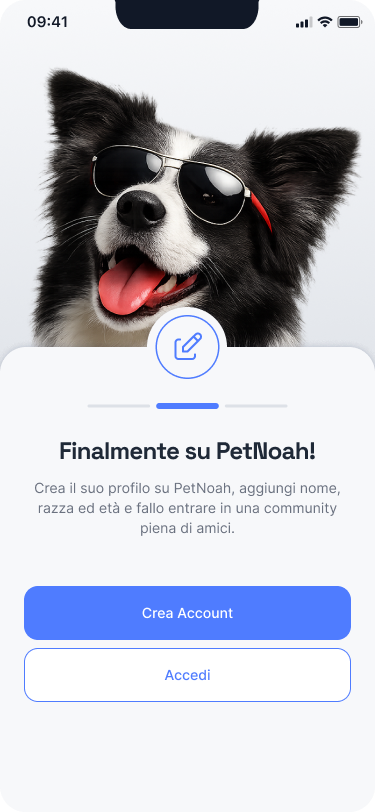
Onboarding screen
Onboarding
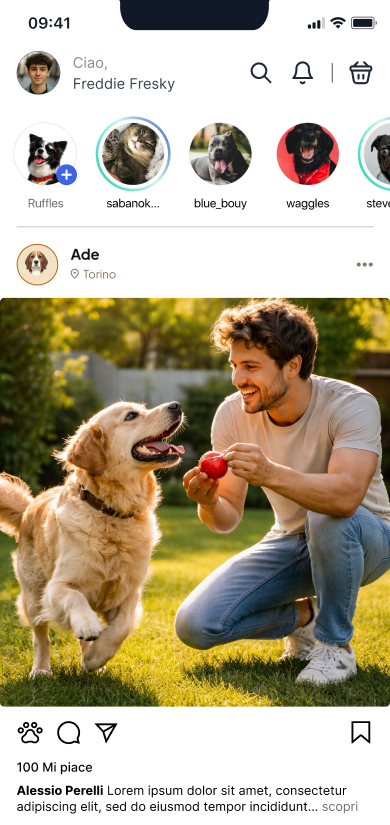
Home screen
Home
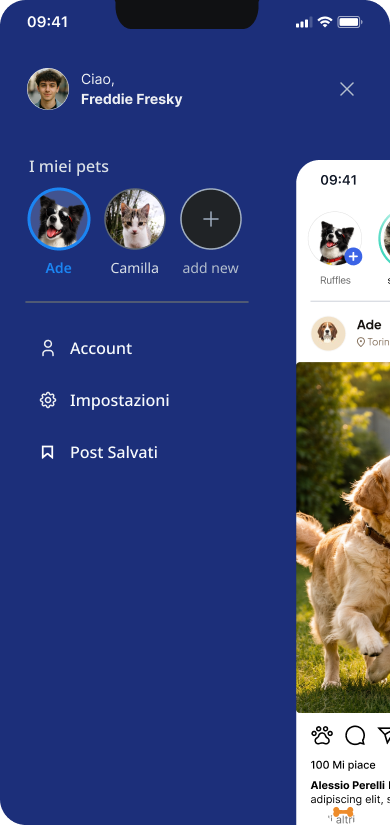
Menu screen
Menu
Map screen
Map
Danger screen
Danger
Select Danger screen
Select Danger

PetNoah moved from a fragile idea skeleton to a user-centred product direction.

My work helped transform a broad product vision into a clearer mobile ecosystem: a familiar pet-first social experience, supported by map-based safety features, privacy controls, walk tracking and a commerce layer that does not distract from the core experience.