WHAT
What problem are we trying to solve?
We’re trying to simplify everyday food management by helping people keep track of the products they already have at home, monitor expiration dates, reduce food waste and save money.
Skado didn't start as a business plan, it started in our own kitchens. My longtime friend and collaborator and I both noticed the same pattern at home: food waste wasn't caused by carelessness, but by distraction. We'd buy groceries without checking what was already in the fridge or pantry, end up with duplicates, and miss the chance to cook simple, anti-waste recipes with what we already had before it went off.
We weren't wasting food because we didn't care. We were wasting it because nothing was keeping track for us.
That observation became the core of Skado: an app where you log every product you buy, record where it's stored, fridge or pantry, and track its expiry date. Nothing gets lost at the back of a shelf again, and distraction stops being the reason food ends up in the bin.
Log what you buy in seconds, so you always know what's already at home.
Mark whether each product lives in the fridge or the pantry.
Get notified before something expires, with enough time to actually use it.
Tracking food is only useful if people actually do it every day. From the very first version, I designed a layer of gamification, challenges, ecoPoints and small rewards, to turn opening the app into a habit rather than a chore, and to nudge users toward the behaviours that actually reduce waste.
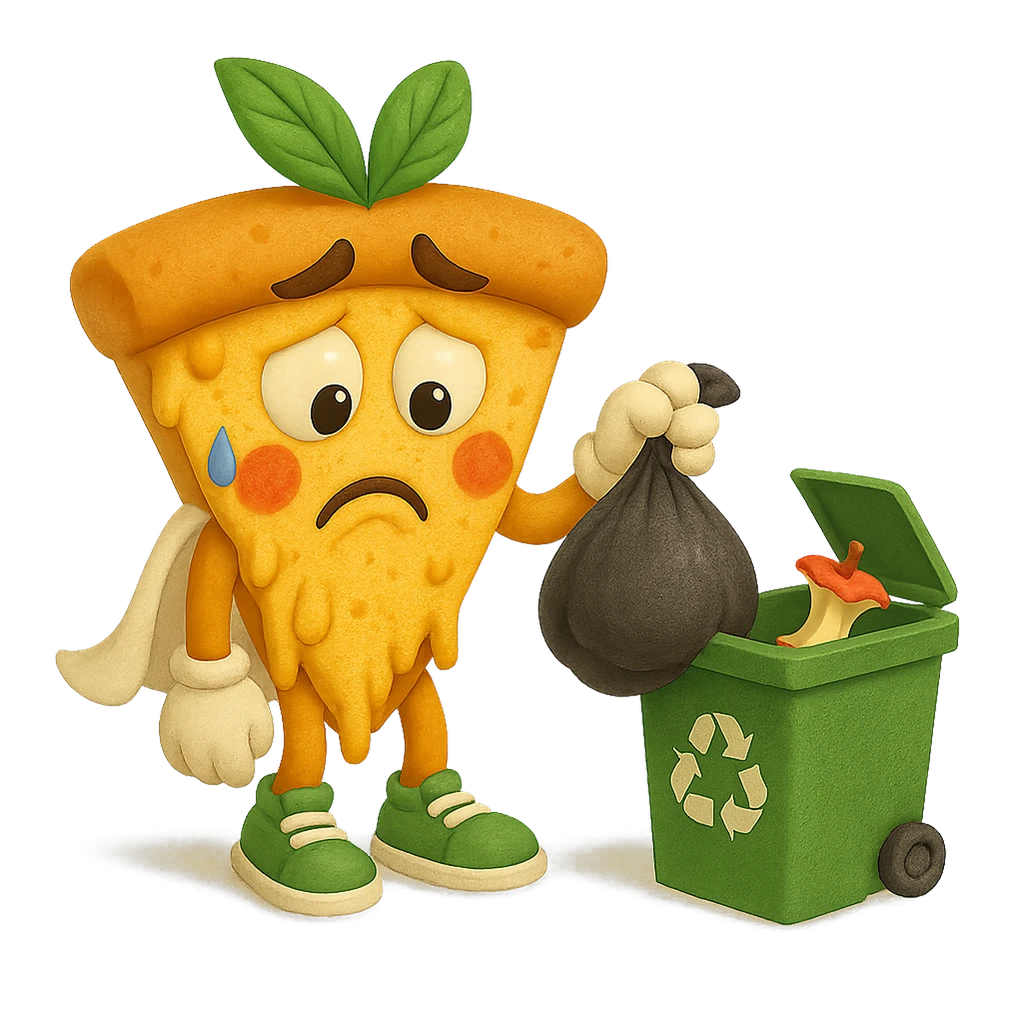
The long-term goal is for Skado to feel at home in any kitchen in the world. To support that, I started designing a crew of mascots built on playful national food stereotypes: an Italian pizza slice, a French baguette, a Japanese nigiri, a Mexican taco, and more to come, each with a personality drawn from the stereotypes of its country. The aim is simple: make Skado a product people genuinely like, not just one they use.




From there, my co-founder and I decided to build Skado together: him on the technical side, me on product and design. Early on, we opened a Discord community to share progress, gather feedback and let early supporters help shape the product with us, alongside a pre-launch website presenting the core features and a public roadmap of what's coming next.
Less food in the bin, more recipes on the table, and a mascot crew the world can root for.
The Goal for this phase is to understand real users: their habits, frustrations, and motivations around food waste.
4W + H
We’re trying to simplify everyday food management by helping people keep track of the products they already have at home, monitor expiration dates, reduce food waste and save money.
We’re solving this for people, couples, families and shared households who often forget what they have in the fridge or pantry and need a clearer, smarter way to manage food before it expires.
Because food waste often happens at home due to forgetfulness, poor planning and lack of visibility over what is already available. Skado helps users make better use of their food before it goes to waste.
To create an engaging and reliable mobile experience that helps users track food, receive smart expiration reminders, discover anti-waste recipes, manage shopping lists and build sustainable habits over time.
By designing clear product-entry flows, smart notifications, AI-powered recipe suggestions, shared shopping lists, useful statistics and gamified challenges that make reducing food waste simple, rewarding and part of users’ daily routine.
Empathize
I didn’t want to design Skado based only on assumptions. Market and competitor data helped me understand the scale of the problem, while user insights helped me understand real habits, frustrations and needs around food waste at home.
For this project I focused on both quantitative and qualitative research.
Before designing anything, I needed to understand the scale of the problem. How big is food waste really? Who is responsible for it, and is there an actual market opportunity here? Quantifying the problem gave Skado a solid foundation to build on.
| Finding | Why it matters |
|---|---|
| Households = largest source of EU waste | Focus on home food management, not external surplus |
| ~130 kg of food wasted per person per year | Scale justifies a dedicated consumer product |
| ~69 kg household waste per person per year | Expiry tracking and reminders address a real daily behaviour |
| ~60% of global food waste comes from homes | Skado can position as a habit-changing daily companion |
I mapped the competitive landscape to understand what already existed and where the gaps were. Rather than reinventing the wheel, I wanted to find the space no one had fully occupied, and design Skado to own it.
The market already contains strong solutions, but most focus either on external surplus food rescue or on basic inventory tracking, leaving a clear space for Skado.
Main competitors
| Product | What they do | Gap for this project |
|---|---|---|
| Too Good To GoSurplus marketplace | Buy discounted surplus food from local stores and restaurants | Focused on external food rescue, not what users already have at home |
| OlioFood sharing platform | Share free surplus food and items with people nearby | Relies on local network activity; no personal pantry management |
| KitcheHome food management | Expiry reminders, shopping lists and recipe suggestions | Opportunity for a more engaging, gamified and emotional experience |
| NoshAI food inventory | AI-based inventory tracking, recipes and waste habit analytics | Opportunity to improve UX, onboarding, gamification and family use |
Positioning map
| Product | Home inventory | Expiry alerts | AI recipes | Shopping list | Gamification | Family use |
|---|---|---|---|---|---|---|
| Too Good To Go | Low | Low | Low | Low | Med | Low |
| Olio | Low | Low | Low | Low | Med | Med |
| Kitche | High | High | Med | High | Low | Med |
| Nosh | High | High | High | High | Low | Med |
| Skado | High | High | High | High | High | High |
With the data in hand, I moved from observation to interpretation. What were the structural problems users faced? And more importantly, where could a well-designed product actually make a difference? These are the five opportunities I decided to pursue.
I noticed early on that most food apps feel like chores. You open them, you tap, you enter data, and you leave. I didn't want Skado to feel like that. The goal was to make adding a product effortless, something you barely notice you're doing.
Product entry via voice input, AI assistance, barcode scanning or quick-add patterns. If it takes more than a few seconds, people stop doing it.
A notification that just says 'your yogurt expires tomorrow' is noise. I wanted every alert in Skado to carry a next step: a recipe, a quick-use idea, a reminder to share with the family. The difference between a notification you ignore and one you act on is simple: one gives you something to do.
"Your yogurt expires tomorrow. Use it in a 5-minute breakfast recipe." Actionable, not just informational.
Most recipe apps start with 'what do you feel like eating?' Skado starts with 'what do you need to use first?' That shift (from inspiration to urgency) was one of the most important design decisions I made. The AI doesn't just suggest meals; it prioritises the ingredients that matter most right now.
Recipes surface products close to expiration first, not just general food preferences.
Food management is a repeated behaviour; it happens every day. But it's not naturally exciting. I wanted Skado to reward the actions that actually matter, and make the habit worth forming.
ecoPoints connect to meaningful behaviours:
People don't change habits because of abstract goals. They change when they can see progress. I designed Skado's stats so users could track exactly how much food they saved, how much money they kept, and how their habits improved week over week.
Key metrics shown to the user:
After gathering and analysing all the data, I synthesised everything into a single, clear conclusion: the north star that guided every decision in the phases that followed.
What the research told me clearly is this: the market gives people tools to rescue food from restaurants or track what they bought at the supermarket. But almost no one is solving for what happens inside the kitchen, every day, before food silently expires. That's the space Skado lives in, and it's wide open.
Before talking to real users, I built a set of hypothetical archetypes grounded in the research, giving the team shared language and a concrete picture of who we were designing for. Five personas, five different relationships with food, five distinct motivations.
Five personas covering the main behavioural archetypes identified during research, differing in household composition, primary motivation and technical confidence. Together they define the full design space Skado needs to address: from solo professionals to families, from budget-driven students to sustainability advocates and health-focused cooks.
Marco is a software developer in Rome. He lives alone, shops on weekends without a list and relies entirely on memory. By mid-week he has no idea what is in his fridge, and by the weekend he finds expired products. He feels guilty about waste but has never found a tool simple enough to actually use.
I open the fridge and find three yogurts expiring today, and no idea what else is in there.
Goals
Pain points
Key needs
Giulia is a primary school teacher managing food for her partner and two children. She shops twice a week with a rough mental plan but struggles to track what was bought when. Food waste is both a financial and ethical concern. She would adopt any tool that helps her coordinate with her partner and reduce what ends up in the bin.
By Saturday I've forgotten what I bought on Monday, and I find it expired in the back of the drawer.
Goals
Pain points
Key needs
Luca is an engineering student sharing a flat with three roommates. His budget is tight and grocery shopping is uncoordinated; they buy duplicates, food disappears from the fridge without explanation, and by month-end he realises a large slice of his budget went to waste. He would use a tool if it helped him and his flatmates stay organised.
We keep buying the same milk three times in a week because nobody checks what we already have.
Goals
Pain points
Key needs
Sofia is a marketing manager who structures her life around sustainability. She shops local, buys organic, composts and tracks her carbon footprint in other areas. But she still wastes food, and the gap between her values and her actual behaviour is a genuine source of frustration. She wants a tool that makes her food choices measurably better.
I buy organic and local, and I still end up throwing it away. It makes me feel like a hypocrite.
Goals
Pain points
Key needs
Andrea is a freelance consultant who follows a strict Mediterranean diet and cooks from scratch daily. He meal preps on Sundays and buys in bulk from specialty stores. When work disrupts his plan, expensive fresh and specialist ingredients expire unused. He wants a system that integrates meal planning with what is actually in his pantry.
I spend more time managing food than actually cooking it, and I still waste expensive ingredients.
Goals
Pain points
Key needs
For each persona, I built an empathy map to go deeper than demographics, exploring what they say, think, do, feel, where they struggle and what they hope for. The goal was to build genuine empathy before jumping to solutions.

Says
Direct expectations
Thinks
Mental model
Does
Observed behaviour
Feels
Emotional state
Pains
Friction points
Gains
Desired outcomes

Says
Direct expectations
Thinks
Mental model
Does
Observed behaviour
Feels
Emotional state
Pains
Friction points
Gains
Desired outcomes

Says
Direct expectations
Thinks
Mental model
Does
Observed behaviour
Feels
Emotional state
Pains
Friction points
Gains
Desired outcomes

Says
Direct expectations
Thinks
Mental model
Does
Observed behaviour
Feels
Emotional state
Pains
Friction points
Gains
Desired outcomes

Says
Direct expectations
Thinks
Mental model
Does
Observed behaviour
Feels
Emotional state
Pains
Friction points
Gains
Desired outcomes
I mapped the complete experience each persona goes through today, without Skado. From shopping to throwing food away, step by step, emotion by emotion. Understanding the current pain points at each stage was essential before designing a better path.
Marco Ricci
The solo professional's weekly food cycle, before Skado exists.
| Motivated | Neutral | Uncertain | Annoyed | Frustrated | Guilty | Resigned |
| ActionGoes to the supermarket and buys based on memory. | ActionUnpacks groceries and stores them loosely. | ActionForgets what was bought. Opens fridge without a plan. | ActionBuys items he already has at home. | ActionDiscovers expired yogurt and vegetables. | ActionThrows away food and wasted money. | ActionThe cycle repeats with no structural change. |
| Thinks"I know what I need. I'll remember." | Thinks"Done. I'll sort this properly later." | Thinks"What do I even have in here?" | Thinks"I was sure I was out of this." | Thinks"Again. How did I not see this coming?" | Thinks"I need to do better." | Thinks"I'll be more careful this time." |
| PainNo list: he overbuys or forgets essentials. | – | PainNo visibility into what is available or expiring soon. | PainSpends money on duplicates unnecessarily. | PainNo reminders about products close to expiry. | PainEnvironmental and financial guilt with no path forward. | PainIntention alone doesn't fix a structural problem. |
| OpportunityAI-suggested shopping list from pantry state. | OpportunityAuto-add products via receipt scan or barcode. | OpportunityVisual pantry overview with expiry proximity. | OpportunityDuplicate warning + smart shopping list. | OpportunityProactive alerts with a recipe suggestion. | OpportunityImpact stats that motivate change, not shame. | OpportunitySkado makes the right behaviour the easiest behaviour. |
Giulia Ferrara
Managing food for a family of four across two weekly shops.
| Organised | Neutral | Uncertain | Stressed | Frustrated | Guilty |
| ActionPlans Monday's shop mentally and buys what she thinks is needed. | ActionStores the food, tries to remember what she bought. | ActionShops again, unsure what's left from Monday. | ActionTries to plan weekend meals but realises things have expired. | ActionFinds expired produce in the back of the fridge. | ActionDiscards food in front of the children. |
| Thinks"I think I know what we're missing." | – | Thinks"Did we use the mozzarella yet?" | Thinks"I can't use all of this before it goes off." | Thinks"Again. That was expensive." | Thinks"I'm setting a bad example." |
| PainNo shared list: her partner doesn't know what was bought. | – | PainBuys duplicates of items from the first shop. | PainNo reminders about what's expiring soonest. | PainWaste is both financial and emotional; she prides herself on good management. | – |
| OpportunityShared household list updated in real time. | OpportunityAuto-inventory from receipt scan. | OpportunityFridge overview before heading out. | OpportunityWeekend meal suggestions based on expiry priority. | OpportunityWeekly waste report with improvement tips. | OpportunityFamily impact stats visible to the whole household. |
Luca Bianchi
The uncoordinated rhythm of a shared student flat.
| Stressed | Neutral | Annoyed | Frustrated | Guilty | Resigned |
| ActionReviews bank statement and realises how much was spent on food. | ActionGoes to supermarket without checking the shared fridge. | ActionStores food in the shared fridge with no labelling or ownership. | ActionBuys items a flatmate already purchased the day before. | ActionFinds expired food that nobody claimed. | ActionRealises food waste ate into this month's budget again. |
| Thinks"How did I spend that much on groceries?" | Thinks"I'll just grab what I think we need." | Thinks"I don't even know what's mine anymore." | Thinks"We have five of these now." | Thinks"Someone should have used this." | Thinks"I'll try to be more careful next month." |
| PainNo visibility into the cost of food waste over the month. | PainNo shared list: buys duplicates of what flatmates already bought. | PainFood disappears without warning, eaten by flatmates or expired. | PainBudget wasted on unnecessary duplicates. | PainNo accountability for food waste in shared household. | – |
| OpportunityBudget tracker showing food waste in euros. | OpportunityShared live list all flatmates can edit. | OpportunityIndividual ownership tagging in shared pantry. | OpportunityDuplicate alert before checkout. | OpportunityExpiry notifications shared to all flatmates. | OpportunityMonthly waste-to-savings summary to reinforce behaviour. |
Sofia Gentile
A sustainability-driven shopper still struggling with food waste.
| Enthusiastic | Neutral | Uneasy | Mixed | Guilty | Frustrated |
| ActionBuys seasonal organic produce with genuine excitement. | ActionTries to plan meals around what she bought. | ActionDeviates from her meal plan due to work or social commitments. | ActionComposts the produce she couldn't use in time. | ActionRealises her food waste undermines her broader sustainability efforts. | ActionShops again, trying to buy less, but the same pattern recurs. |
| Thinks"This is exactly how food should be bought." | Thinks"I should be able to use all of this." | Thinks"I won't get through all of this before it goes off." | Thinks"At least it's not going to landfill. But I still wasted it." | Thinks"I buy organic and local but I'm still wasting it." | Thinks"I'll be more careful about what I pick up this time." |
| – | PainSeasonal variety makes it hard to plan standard meals. | PainFresh organic produce has shorter shelf life than standard. | PainComposting doesn't reduce waste; it just lessens the guilt. | PainThe gap between values and actual behaviour is a real source of distress. | – |
| OpportunitySkado suggests recipes for unusual seasonal produce before she shops. | OpportunityAI recipe suggestions from pantry contents. | OpportunityAdaptive reminders when the meal plan is falling behind. | OpportunityShow CO₂ impact of waste even when composted. | OpportunityPositive framing: show how much was saved, not just what was wasted. | OpportunityPre-market suggestions based on what is still in the pantry. |
Andrea Moretti
A disciplined home cook undone by any disruption to his routine.
| Methodical | Satisfied | In control | Anxious | Frustrated | Guilty | Tired |
| ActionPlans the week's Mediterranean meals manually on paper. | ActionBuys for the week from specialty stores, feels organised. | ActionCooks as planned: everything works. | ActionA work commitment means he can't cook as planned. | ActionFresh produce and specialty ingredients expire unused. | ActionDiscards expensive Mediterranean ingredients he sourced carefully. | ActionStarts over next Sunday knowing the cycle may repeat. |
| Thinks"If I plan this right, nothing will be wasted." | Thinks"Everything I need for the week is here." | Thinks"This is exactly how it should be." | Thinks"I need to move meals around but I don't know what will expire first." | Thinks"That was expensive. I had a specific plan for that." | Thinks"I spent time finding these and now they're in the bin." | Thinks"I'll account for disruptions in the plan this time." |
| PainManual planning doesn't account for what's already in the pantry. | – | – | PainNo system to help him adapt his meal plan to the new reality. | PainSpecialty ingredients can't be found in regular supermarkets; the loss is significant. | – | – |
| OpportunityMeal planning integrated with live pantry state. | OpportunityAuto-add items to pantry from shopping receipt. | OpportunityPositive reinforcement when the plan is on track. | OpportunityPlan-rebalancing suggestions based on expiry order. | OpportunityUrgent expiry alerts with alternative recipe suggestions. | OpportunityImpact tracking that shows money saved over time as motivation. | OpportunitySmart planning that builds in buffer for schedule changes. |
Transforming research findings into a clear problem definition: user needs, pain points, design principles and the challenge that guided every decision that followed.
After weeks of research, I had a mountain of data. The real work here was making sense of it, identifying the patterns that mattered and translating them into a direction concrete enough to design against.
After analysing the research findings, the main challenge was not simply helping users 'track expiration dates'. The deeper problem was that people often lose visibility over the food they already have at home.
Key design direction
Skado needs to reduce the cognitive effort of managing food at home and help users take action before products expire.
These four pain points emerged consistently across all five personas. They aren't symptoms of bad habits; they're structural problems that no existing tool has solved well enough.
Users don't remember what they already have in the fridge or pantry and only realise it when it's too late.
Skado should give users a clear and immediate overview of everything they have at home.
It's perceived as boring, repetitive, or complex, especially for elderly users or time-constrained students.
Product entry must be as fast as possible via barcode scanning, voice input and AI assistance.
Reminders are often too generic, too late, or not customisable enough to match user routines and habits, I need something like duolingo.
Every alert should carry an actionable next step: a recipe, a quick-use idea, or a family reminder.
There's a missing link between what users have at home and what they could cook, which leads to frustration and waste.
Recipes should surface the ingredients that matter most right now, sorted by urgency, not inspiration.
From the pain points, I distilled six core user needs: the concrete things Skado must deliver to be genuinely useful, not just interesting.
| User need | Why it matters |
|---|---|
| Know what food they already have at home | To avoid duplicated purchases and forgotten products |
| Be reminded before products expire | To act before food becomes waste |
| Get simple suggestions for what to cook | To reduce the effort of deciding how to use expiring ingredients |
| Add products faster | Manual input can become a barrier to long-term use |
| See the impact of their actions | Visible savings and progress increase motivation |
| The experience to feel rewarding | Habit-building requires engagement, not just utility |
A single clear statement of the problem Skado is solving. This became the anchor for every design decision in the phases that followed.
Busy households need a simple and engaging way to track food, remember expiration dates and use products before they expire, because poor visibility and lack of planning often lead to unnecessary food waste and extra spending.
The Define phase crystallised into six product goals. Not feature lists: intentions. The outcomes Skado must achieve to be worth building.
Help users understand what they have at home, where products are stored and which items require attention first.
Notify users before food expires and encourage timely action, rather than simply showing expired items after the fact.
Recipe suggestions should prioritise ingredients users already have, especially those close to expiration, not generic preferences.
Adding and updating products should be as fast as possible through barcode scanning, receipt import, AI assistance and voice input.
Reward anti-waste behaviours using ecoPoints, challenges, levels and progress indicators that make the habit worth forming.
Show users exactly how much food, money and environmental impact they've saved over time, so progress feels real.
Good design isn't a trade-off between user value and business value. I mapped how every user need connects to a product response and a business outcome, to show they pull in the same direction.
| User need | Product response | Business value |
|---|---|---|
| Remember expiring food | Smart expiration reminders | Increases retention and recurring app usage |
| Know what is available at home | Fridge and pantry inventory | Creates daily utility and habit formation |
| Find ways to use ingredients | AI-powered recipe suggestions | Differentiates Skado from basic trackers |
| Save money | Food and spending statistics | Strengthens perceived product value |
| Coordinate with family | Shared shopping lists | Supports future Family subscription plan |
| Stay motivated | ecoPoints, levels and challenges | Encourages engagement and repeat sessions |
| Reduce food waste | Impact dashboard | Strengthens sustainability positioning |
The design challenge
How can Skado help users reduce household food waste by making food tracking easier, expiration reminders more actionable, and sustainable habits more engaging over time?
Exploring possible solutions, from brainstorming to feature prioritisation, user flows and information architecture, before converging on a clear product direction.
Coming out of the Define phase, everything crystallised into one question: the challenge that became the north star for the entire ideation process.
How can Skado help users reduce household food waste by making food tracking easier, expiration reminders more actionable, and sustainable habits more engaging over time?
I translated each pain point into a 'How Might We' question to frame ideation around real user problems rather than assumed solutions.
| Pain point | How Might We… |
|---|---|
| Users forget products at home | help users keep visibility over the food they already have? |
| Expiration dates are easy to miss | remind users at the right time without notifications feeling annoying? |
| Users don't know what to cook | turn expiring ingredients into useful, contextual recipe suggestions? |
| Adding products manually can feel boring | make product entry fast, simple and low-effort? |
| Shared households create confusion | help families and roommates coordinate food and shopping together? |
| Sustainability can feel abstract | make the user's positive impact visible and genuinely motivating? |
| Food tracking can feel repetitive | make reducing food waste feel rewarding and habit-forming? |
I explored multiple directions before deciding on anything. The goal here wasn't to find the right answer; it was to generate enough options to find the best ones.
| User need | Possible solution |
|---|---|
| Remember products before they expire | Smart expiration reminders |
| Reduce manual input | Voice-based product entry with AI |
| Know what is inside the fridge / pantry | Home inventory organised by storage location |
| Use expiring products | AI-powered recipe suggestions |
| Stay motivated | ecoPoints, levels, streaks and weekly challenges |
| Understand personal impact | Dashboard with food saved, money saved and recipes generated |
Not everything could go into v1. I used a Must / Should / Could / Later framework to decide what was essential for the MVP and what could evolve with the product.
| Priority | Feature | Reason |
|---|---|---|
| Must have | Add food products | Core action required to make the app useful |
| Expiration date tracking | Directly addresses the main pain point | |
| Smart reminders | Helps users act before food becomes waste | |
| Storage location | Helps users know where products are kept | |
| Should have | AI voice input | Reduces friction in product entry |
| Recipe suggestions | Turns expiring ingredients into action | |
| Shopping list | Helps prevent duplicated purchases | |
| Could have | ecoPoints and levels | Increases engagement and retention |
| Impact statistics | Makes savings and sustainability visible | |
| Later | Family plan collaboration | Strong business opportunity, but can evolve after MVP |
| Store partnerships | Future monetisation and ecosystem expansion |
I prioritised features based on three criteria: user value, feasibility for an MVP and alignment with Skado's core mission. The first version needed to focus on the behaviours most directly connected to reducing food waste: adding products, tracking expiration dates and receiving timely reminders.
I mapped the four main flows that define how users interact with Skado. The goal was not just to map steps, but to identify the moments where good design makes the difference between action and abandonment.
The most important flow was not simply adding a product, but helping users complete the full anti-waste loop: notice an expiring item, find a way to use it, mark it as used and receive feedback for the positive action.
I organised the app's structure around the main user goals: checking what needs attention, managing inventory, finding recipes and tracking progress. The IA was designed for action, not passive data storage.
The information architecture was organised around the main user goals: checking what needs attention, managing food inventory, finding recipes and tracking progress.
The ideation phase closed with a clear product concept built around four pillars. These became the framework for every design decision in the Prototype phase.
Help users add and monitor food products at home with minimal friction.
Notify users before products expire and suggest concrete next steps.
Generate recipes based on available and expiring ingredients.
Reward users and show their positive impact over time.
Turning ideas into tangible, testable artefacts, from rough wireframes to high-fidelity interactive flows, so we can learn fast and fail cheaply before writing a single line of code.